ITM OT Convergence: The Opportunity, the Risk, and Why Governance Must Come First
Arun Nair, CEO of Sysintegra, shares his personal view on IT OT convergence. The integration of operational technology (OT) environments with enterprise IT networks is one of the most significant shifts happening across critical infrastructure today.
Key Takeaways
- IT OT convergence delivers genuine operational gains. Unified asset and configuration visibility, faster incident response, and monitoring that spans both environments for the first time.
- Connecting legacy OT equipment to modern networks exposes it to threats it was never designed to handle. AI is accelerating the rate at which adversaries and bad actors discover unknown vulnerabilities.
- The answer is to converge with governance built in from day one: least-privilege access, time-bound and attributable privileged access, and OT vulnerability response that works within operational constraints.
A First Rule That Doesn’t Age Well
For most of industrial history, these worlds were kept deliberately disconnected. That era is ending, and not entirely on our terms.
I started inside that disconnected world: running IT and physical security systems at gas plants and refineries in the Middle East. The first rule was simple. These systems put availability and safety above everything, including security patches. You work around them, not through them.
What Does IT OT Convergence Actually Deliver?
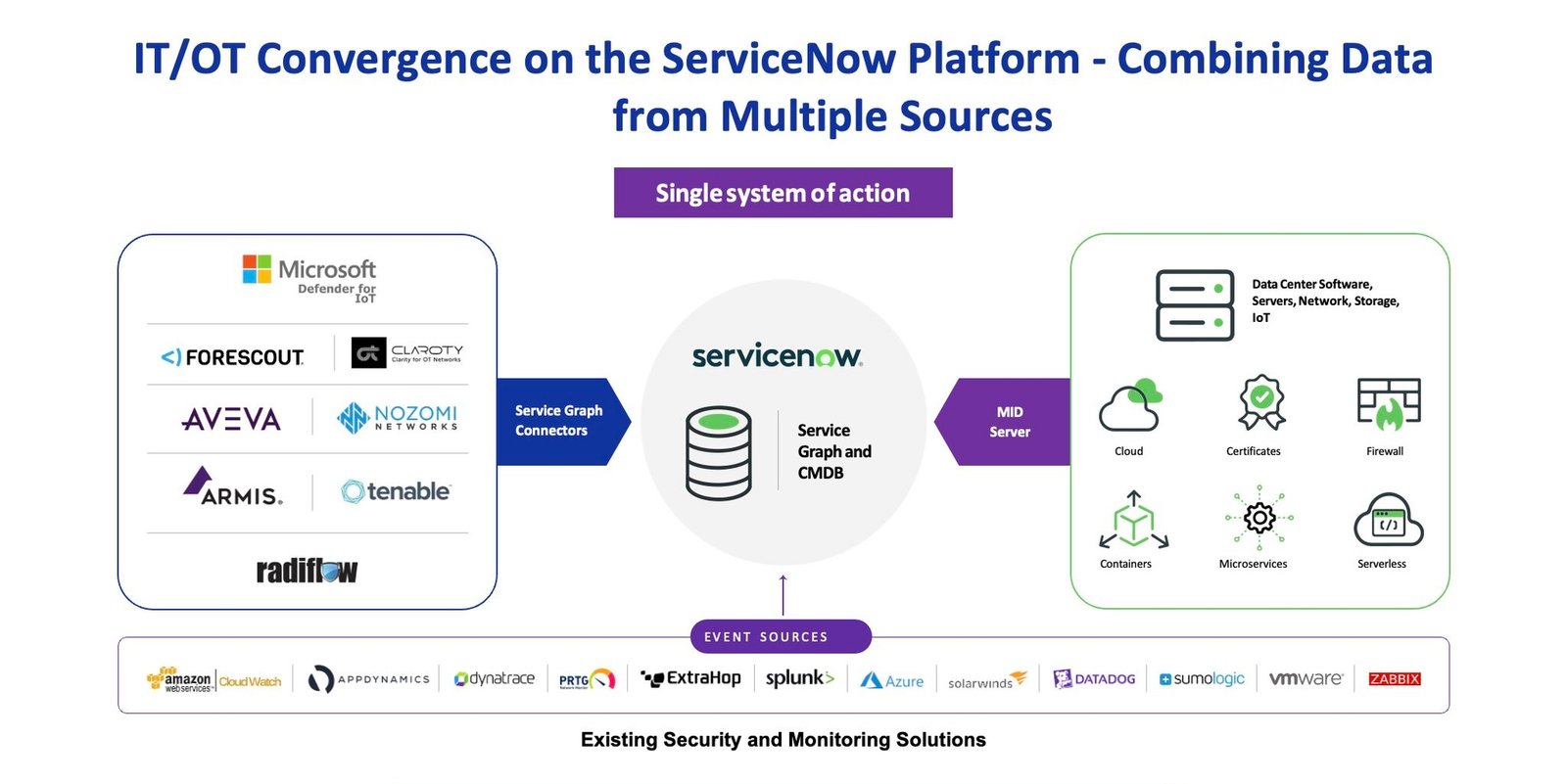
Now they’re opening up the networks and convergence brings genuine gains. Unified asset and configuration visibility. Faster incident response. Monitoring that finally spans IT and OT together, rather than operating as parallel silos with a gap in the middle. For critical-infrastructure operators, it’s one of the biggest opportunities of the decade.
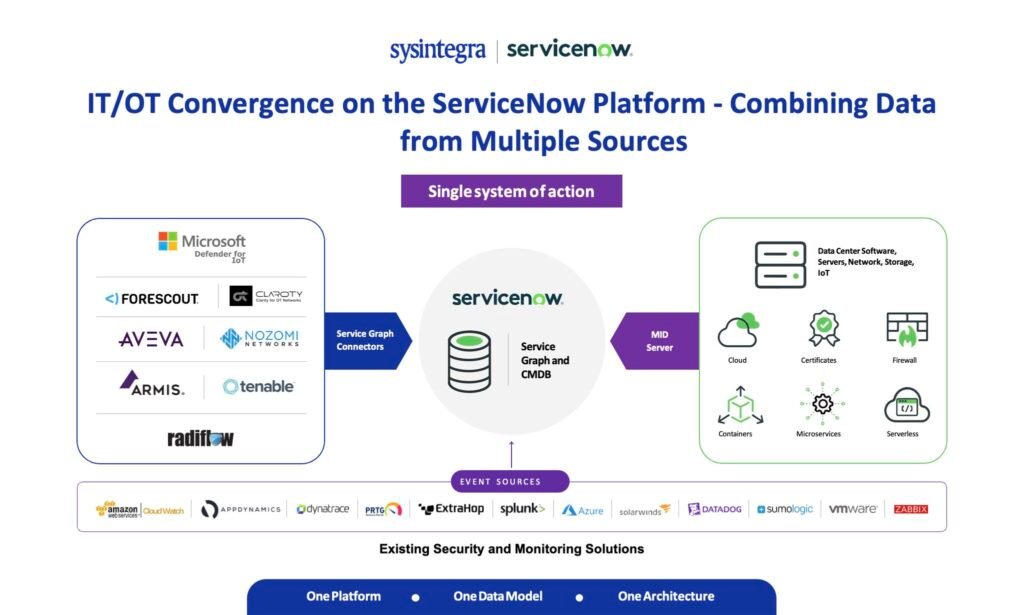
The risk lives in the same sentence. Connecting decades-old equipment to modern networks exposes it to threats it was never designed to withstand and AI has already changed the economics of finding those weaknesses, discovering unknown vulnerabilities faster than any human team. Assume adversaries get there too.
The answer isn’t to slow down. It’s to converge with governance built in from day one.
ARUN NAIR
Governance Built In, Not Bolted On
The answer isn’t to slow down. It’s to converge with governance built in from day one: least privilege, vendor and privileged access that’s time-bound and attributable, OT vulnerability response that’s genuinely operational. ServiceNow offerings are maturing fast in this space but even the best technology only takes you as far as the discipline and sector expertise behind it.
This is among the work I find most interesting right now. Over two decades in, it’s the closest my work in this space has come to where I started.
Frequently Asked Questions
What is IT OT convergence?
IT OT convergence refers to the integration of operational technology, the industrial control systems, sensors, and equipment that run physical infrastructure, with enterprise IT networks. Historically kept separate for safety and availability reasons, these environments are now being connected to enable unified monitoring, faster incident response, and greater operational efficiency across critical industries.
What are the main security risks of IT OT convergence?
The primary risk is exposing legacy OT equipment to modern cyber threats, often decades old and designed without network security in mind. Unlike IT systems, OT environments prioritise availability and safety over patching cycles, meaning vulnerabilities can persist for years. AI is accelerating adversary capabilities, enabling automated vulnerability discovery at a scale and speed no human security team can match alone.
How should organisations govern IT OT convergence securely?
Governance must be built in from day one, not retrofitted. That means least-privilege access controls, vendor and privileged access that is time-bound and fully attributable, and OT-specific vulnerability response processes that respect operational constraints. Platform support, such as ServiceNow’s expanding ITOM and security capabilities, is valuable, however technology only goes as far as the sector expertise and operational discipline behind it.